




Lifting Clutches: The Cornerstone of Safe and Efficient Precast Concrete Handling
Views: 797 Update date: Mar 04,2026
Precast Concrete Handling
Precast concrete components—including wall panels, beams, pipes, and staircases—undergo repeated lifting throughout their lifecycle: from production and storage to transportation and final installation. To ensure these operations are both safe and efficient, manufacturers depend on lifting clutches, which are indispensable components in nearly all precast lifting systems.
What Is a Lifting Clutch?
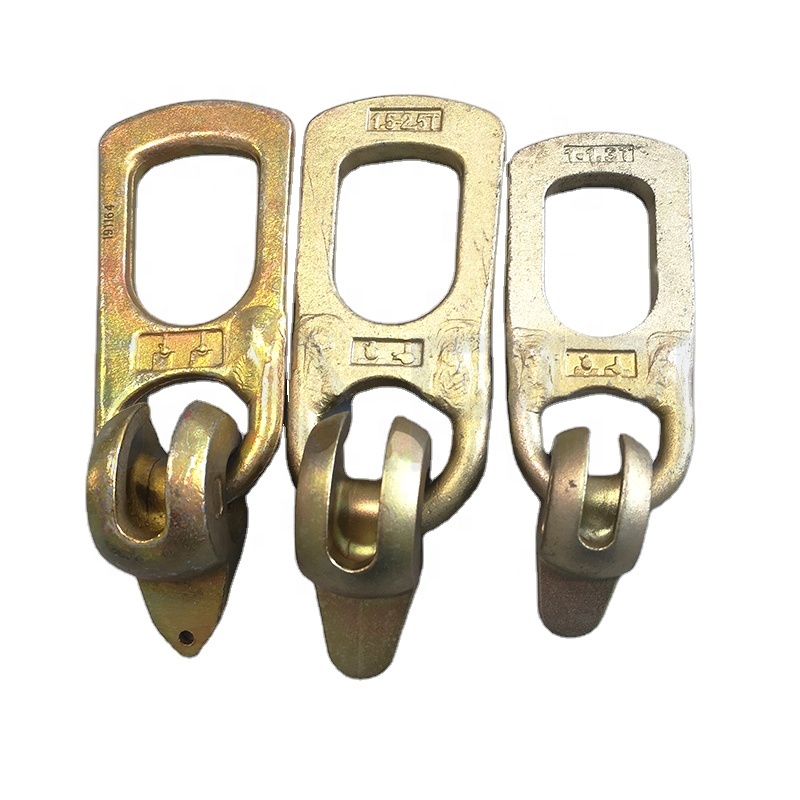
A lifting clutch is a high-strength steel device engineered to link a crane’s hook or lifting apparatus to a cast-in anchor embedded within a concrete element. During production, a compatible lifting anchor is positioned inside the mold. Once the concrete cures, the clutch securely locks onto this anchor, enabling the entire component to be lifted safely. After on-site placement, the operator releases the clutch, which can then be reused for the next component.
How Lifting Clutches Operate
The core principle is straightforward: the anchor is embedded in the concrete, the clutch attaches to it, and the load is lifted. Modern clutches utilize a mechanical locking mechanism that firmly grips the anchor head, preventing accidental disengagement. Their ability to rotate and swivel allows them to accommodate not only vertical lifts but also the tilting and repositioning of complex precast shapes. Operators can attach or detach the clutch rapidly—often with a single hand—streamlining both production and installation workflows.
Types and Applications
While designs vary, most lifting clutches fall into three primary categories: spherical head clutches, ring clutches, and swivel clutches. Each is optimized for distinct load capacities, lifting angles, and environmental conditions. They are deployed across a wide range of precast products, from panels and beams to staircases, manholes, foundation blocks, and custom concrete components.
The Significance of Lifting Clutches
Their value stems from three key attributes: safety, durability, and efficiency. Certified lifting clutches provide reliable load handling and adhere to stringent international standards, instilling confidence in operators when moving heavy concrete elements. As reusable tools, they can be deployed thousands of times, reducing long-term operational costs. Their quick-connect design also cuts down on installation time, a critical factor in both factory production and on-site assembly.
Selecting the Optimal System
When choosing a lifting clutch, it is essential to match it with the correct anchor type and load capacity. Additional considerations include concrete strength, lifting angles, and environmental conditions. A well-engineered system ensures seamless handling from the moment the component is demolded to its final on-site placement.
Conclusion
Lifting clutches are essential tools that make heavy lifting in precast concrete operations safe, predictable, and efficient. They integrate the entire workflow—from casting to installation—and remain among the most reliable solutions in the precast industry.
Prev: Inside Simen Precast’s Precision Production: Crafting the Two-Hole Anchor for Prestressed Concrete
Next: Why Compact Anchor from Qingdao SIMEN PRECAST Is Your Best Choice for Precast Projects?
Precast Concrete Handling
Precast concrete components—including wall panels, beams, pipes, and staircases—undergo repeated lifting throughout their lifecycle: from production and storage to transportation and final installation. To ensure these operations are both safe and efficient, manufacturers depend on lifting clutches, which are indispensable components in nearly all precast lifting systems.
What Is a Lifting Clutch?
A lifting clutch is a high-strength steel device engineered to link a crane’s hook or lifting apparatus to a cast-in anchor embedded within a concrete element. During production, a compatible lifting anchor is positioned inside the mold. Once the concrete cures, the clutch securely locks onto this anchor, enabling the entire component to be lifted safely. After on-site placement, the operator releases the clutch, which can then be reused for the next component.
How Lifting Clutches Operate
The core principle is straightforward: the anchor is embedded in the concrete, the clutch attaches to it, and the load is lifted. Modern clutches utilize a mechanical locking mechanism that firmly grips the anchor head, preventing accidental disengagement. Their ability to rotate and swivel allows them to accommodate not only vertical lifts but also the tilting and repositioning of complex precast shapes. Operators can attach or detach the clutch rapidly—often with a single hand—streamlining both production and installation workflows.
Types and Applications
While designs vary, most lifting clutches fall into three primary categories: spherical head clutches, ring clutches, and swivel clutches. Each is optimized for distinct load capacities, lifting angles, and environmental conditions. They are deployed across a wide range of precast products, from panels and beams to staircases, manholes, foundation blocks, and custom concrete components.
The Significance of Lifting Clutches
Their value stems from three key attributes: safety, durability, and efficiency. Certified lifting clutches provide reliable load handling and adhere to stringent international standards, instilling confidence in operators when moving heavy concrete elements. As reusable tools, they can be deployed thousands of times, reducing long-term operational costs. Their quick-connect design also cuts down on installation time, a critical factor in both factory production and on-site assembly.
Selecting the Optimal System
When choosing a lifting clutch, it is essential to match it with the correct anchor type and load capacity. Additional considerations include concrete strength, lifting angles, and environmental conditions. A well-engineered system ensures seamless handling from the moment the component is demolded to its final on-site placement.
Conclusion
Lifting clutches are essential tools that make heavy lifting in precast concrete operations safe, predictable, and efficient. They integrate the entire workflow—from casting to installation—and remain among the most reliable solutions in the precast industry.


 SMPRE™

 799384842
 +86-17606489157
 info@simenprecast.com
 Simen
Simen