




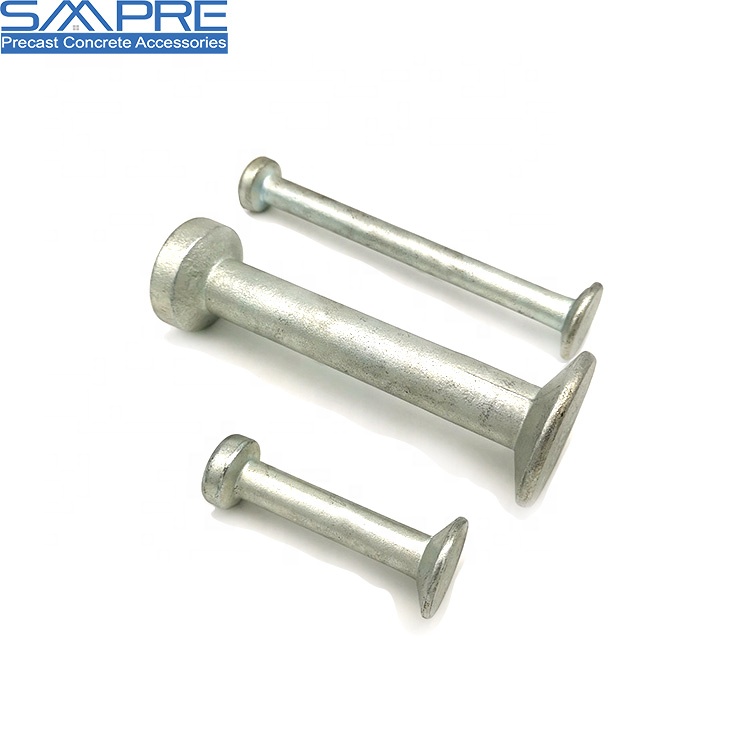
Spherical Head Transport Anchor: A Key Component for Precast Concrete Handling
Views: 293 Update date: Mar 25,2026
Spherical head transport anchors are high-performance specialized fasteners designed for the safe lifting, turnover and transportation of precast concrete elements. As a core accessory in precast construction, their unique spherical head design, refined manufacturing and strict quality control make them ideal for heavy precast parts like wall panels, beams, piers and columns. This product ensures hoisting safety, avoids stress-induced concrete damage, and boosts the efficiency and quality of prefabricated projects.
Manufacturing Craftsmanship
Material Selection & Precision Forging
These anchors are made of high-strength carbon steel or low-alloy structural steel, selected for superior tensile strength and toughness. Adopting closed-die forging, raw steel is heated and stamped into an integrated blank (spherical head, shank and base) in one piece. This process optimizes the metal grain structure, eliminates internal flaws, and improves load capacity, fatigue resistance and durability for heavy-duty lifting.
Anti-Corrosion Surface Treatment
Hot-dip galvanizing is the standard surface treatment to resist corrosion in humid, coastal or chemically harsh environments. Forged blanks are degreased, pickled and coated with a thick, tight zinc layer to block moisture and corrosive substances. Optional upgrades like mechanical galvanizing, epoxy coating or zinc-aluminum alloy coating are available for extended service life in extreme conditions.
Precision Machining & Quality Testing
The spherical head is CNC-machined to tight tolerances for a perfect fit with lifting shackles and slings, preventing jamming or slipping. Every batch undergoes strict inspections per EN 1337-2, ACI 318 and other international standards, including tensile tests, load tests, dimensional checks and coating thickness verification, ensuring zero defects and safe application.
Application & Usage Process
Precast Concrete Casting Integration
During precast production, anchors are fixed to formwork at calculated lifting points. The shank’s anti-pull structure enhances concrete bonding, while the spherical head remains exposed for lifting access. After concrete pouring and curing, the anchor bonds firmly with the precast element to evenly distribute lifting forces and avoid cracking.
Transportation & Lifting Operation
Once concrete reaches design strength, matching lifting shackles are attached to the spherical head. The spherical design allows minor angle adjustment to offset lifting misalignment, balancing stress across anchors. A qualified crane lifts, transfers and places the component steadily, with the anchor bearing full weight safely throughout transit and installation.
Post-Installation Handling
After the precast part is positioned, temporary anchors can be removed with specialized tools without damaging concrete, while permanent anchors remain embedded. Removed anchor holes are patched with high-strength non-shrink grout to restore surface flatness and structural integrity.
Industry Advantages & Innovations
Compared to standard lifting anchors, this spherical head model reduces accessory wear, offers higher load safety and better corrosion resistance. Recent innovations include lightweight alloy anchors for small parts and smart sensing anchors with built-in stress chips, enabling real-time load monitoring to further enhance construction safety and intelligence.
Prev: SMPRE Launches Upgraded R Lifting Anchor for Precast Concrete Construction
Next: Why Choose Qingdao SIMEN PRECAST Magnetic Plug for Your Precast Concrete Projects?
Spherical head transport anchors are high-performance specialized fasteners designed for the safe lifting, turnover and transportation of precast concrete elements. As a core accessory in precast construction, their unique spherical head design, refined manufacturing and strict quality control make them ideal for heavy precast parts like wall panels, beams, piers and columns. This product ensures hoisting safety, avoids stress-induced concrete damage, and boosts the efficiency and quality of prefabricated projects.
Manufacturing Craftsmanship
Material Selection & Precision Forging
These anchors are made of high-strength carbon steel or low-alloy structural steel, selected for superior tensile strength and toughness. Adopting closed-die forging, raw steel is heated and stamped into an integrated blank (spherical head, shank and base) in one piece. This process optimizes the metal grain structure, eliminates internal flaws, and improves load capacity, fatigue resistance and durability for heavy-duty lifting.
Anti-Corrosion Surface Treatment
Hot-dip galvanizing is the standard surface treatment to resist corrosion in humid, coastal or chemically harsh environments. Forged blanks are degreased, pickled and coated with a thick, tight zinc layer to block moisture and corrosive substances. Optional upgrades like mechanical galvanizing, epoxy coating or zinc-aluminum alloy coating are available for extended service life in extreme conditions.
Precision Machining & Quality Testing
The spherical head is CNC-machined to tight tolerances for a perfect fit with lifting shackles and slings, preventing jamming or slipping. Every batch undergoes strict inspections per EN 1337-2, ACI 318 and other international standards, including tensile tests, load tests, dimensional checks and coating thickness verification, ensuring zero defects and safe application.
Application & Usage Process
Precast Concrete Casting Integration
During precast production, anchors are fixed to formwork at calculated lifting points. The shank’s anti-pull structure enhances concrete bonding, while the spherical head remains exposed for lifting access. After concrete pouring and curing, the anchor bonds firmly with the precast element to evenly distribute lifting forces and avoid cracking.
Transportation & Lifting Operation
Once concrete reaches design strength, matching lifting shackles are attached to the spherical head. The spherical design allows minor angle adjustment to offset lifting misalignment, balancing stress across anchors. A qualified crane lifts, transfers and places the component steadily, with the anchor bearing full weight safely throughout transit and installation.
Post-Installation Handling
After the precast part is positioned, temporary anchors can be removed with specialized tools without damaging concrete, while permanent anchors remain embedded. Removed anchor holes are patched with high-strength non-shrink grout to restore surface flatness and structural integrity.
Industry Advantages & Innovations
Compared to standard lifting anchors, this spherical head model reduces accessory wear, offers higher load safety and better corrosion resistance. Recent innovations include lightweight alloy anchors for small parts and smart sensing anchors with built-in stress chips, enabling real-time load monitoring to further enhance construction safety and intelligence.


 SMPRE™

 799384842
 +86-17606489157
 info@simenprecast.com
 Simen
Simen